Loading...
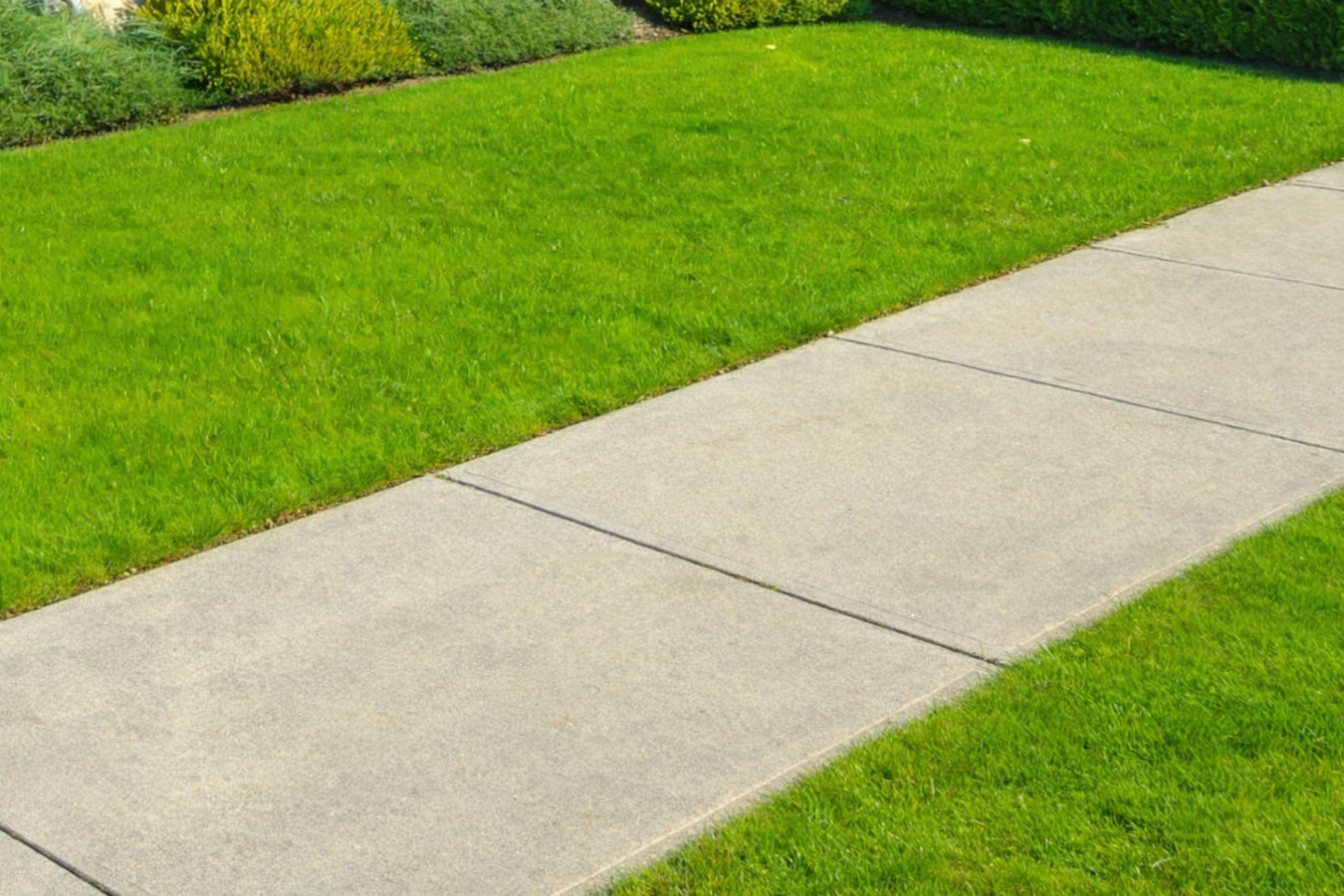
A cracked or missing walkway is more than an eyesore - it is a trip hazard. We build concrete sidewalks that stay level and intact through Indiana freeze-thaw winters, so your family and guests have a safe, clean path every season.
Concrete sidewalk building in Peru, IN involves preparing the ground, setting forms, pouring ready-mixed concrete, finishing the surface by hand with a broom texture and control joints, then curing - most residential walks are complete in a single day on site, with foot traffic safe again in 24 to 48 hours.
Many homeowners in Peru reach out because an older walk has cracked, heaved, or settled after years of Indiana winters - and patching has stopped keeping up with the damage. A full replacement with proper base preparation is usually the smarter long-term investment at that point. If you are also thinking about your driveway while the crew is on site, our concrete driveway building work pairs naturally with sidewalk replacement.
The details that separate a good job from a poor one are not visible to the eye once the concrete is poured - proper compaction, graded drainage, correct mix for freeze-thaw exposure, and well-spaced control joints. These are the steps we do not skip, and they are the reason a well-built sidewalk can last 30 years in this climate.
After years of Indiana winters, older sidewalks develop cracks, raised edges, or sections that have settled unevenly. These are not just eyesores - uneven surfaces are a trip hazard for family members and visitors. When patching no longer keeps up with the damage, full replacement is the smarter move.
Some homes simply lack a proper walkway, leaving guests to cross the lawn or navigate an informal gravel path. A concrete sidewalk gives your property a finished look and keeps mud out of your home during Peru's wet spring and fall seasons.
Older walkways were sometimes built narrower than what feels comfortable today, or they take a route nobody actually uses. Building a new sidewalk lets you design the path you actually want - wider, more direct, or connecting areas of your yard that currently feel disconnected.
In established Peru neighborhoods, mature trees can push sidewalk slabs up from below over time. If your current walk has been lifted by roots or collects standing water after rain, a new installation with proper grading and base preparation solves both problems at once.
We build new sidewalks, replace damaged ones, and extend existing walks for residential and light commercial properties throughout Peru and Miami County. Every project includes a site visit to assess the soil, check drainage, and note any roots or obstacles before we quote. For homeowners who want a more finished look, our garage floor concrete work uses the same base-prep standards and can be scheduled alongside a walkway project for a single mobilization.
If the brief calls for something more decorative - a stamped border, an exposed aggregate finish, or a colored surface - we bring those options to the table as well. We also handle the permit process when one is required for right-of-way work, so you are not left navigating the city on your own. Our concrete driveway building team handles apron and transition work when a new sidewalk meets an existing driveway.
For homes that lack a defined path - gives your property a clean, finished look and a safe route from street or driveway to door.
For existing walks that have cracked, heaved, or settled beyond patching - includes full removal, base prep, and pour.
For homeowners who want a wider path, a longer walk, or a connection to a new patio or garage apron.
For buyers who want exposed aggregate, a light stamp pattern, or a colored surface rather than standard gray broom finish.
Peru is situated in the Mississinewa River valley, and much of the surrounding area has clay-heavy soils that expand when wet and shrink when dry. This movement can shift a sidewalk slab over time if the base is not prepared correctly - a gravel layer under the slab improves drainage and reduces soil movement. Many of Peru's homes were built before 1970, and original walkways in those neighborhoods have gone through decades of freeze-thaw stress. When we replace one of those old walks, we address the drainage and base conditions that caused the original to fail, not just the surface. Homeowners in Wabash face the same clay soil challenges, and we build sidewalks there with the same standards.
Peru's winters bring repeated freeze-thaw cycles from roughly November through March. Water seeps into tiny surface pores, freezes, expands, and breaks the concrete from the inside - a process called spalling. Preventing this starts at the mix: we specify concrete designed for freeze-thaw exposure, not the cheapest material available. We also pitch every sidewalk slightly away from the house so water runs off rather than pooling under the slab. Customers in Logansport deal with the same winter conditions, and we apply the same mix and drainage standards there.
Call or send a request online and we will reply within one business day. We schedule a site visit to measure, check soil conditions, look for roots or drainage issues, and confirm whether a permit is needed - then give you a written estimate before anything is scheduled.
We remove any existing concrete, excavate to the right depth, compact the subgrade, and add a gravel base layer when the soil requires it. In Peru's clay-heavy ground, this step is what keeps the slab level for years rather than seasons.
The crew pours and screeds the concrete, applies a broom finish for traction, and cuts or tools control joints at regular intervals. The whole pour and finish process usually takes a few hours, and the site is cleaned before the crew leaves.
Stay off the sidewalk for 24 to 48 hours - your contractor will give you a specific timeframe. If a final permit inspection is required, we schedule it. Once cured, your new sidewalk is ready for everyday use and should serve you for decades with basic care.
Free estimate, written quote before any work starts. We reply within one business day.
(765) 919-8766Peru's clay-heavy Mississinewa valley soils shift with moisture. We assess the subgrade on every job and compact or add gravel base as needed before we set forms - because the work below the surface is what determines how long the slab above it stays level.
We specify concrete designed for freeze-thaw exposure, not the cheapest available material. In north-central Indiana's climate, mix selection directly affects how the surface holds up over years of winter stress - and we can explain our mix choice to any customer who asks.
When a sidewalk connects to a public street or right-of-way, a permit is typically required. We handle that process so you do not have to navigate city requirements on your own. The American Concrete Institute sets the technical standards behind the work we do.
Control joints are shallow cuts or grooves spaced along the slab that give concrete a place to move in a controlled, nearly invisible way. Skipping them is one of the most common ways a budget sidewalk fails early. We include them on every project as a baseline - not an upgrade.
A concrete sidewalk is one of the simpler projects on a home, but it fails fast when the base is wrong or the mix is not suited for the climate. We build them to last in Peru's winters, and we stand behind the work with a written estimate and a clear explanation of what we are doing and why. The American Concrete Institute publishes the technical standards our mix selection and installation practices are based on.
Combine your sidewalk project with a new garage floor using the same crew and a single mobilization.
Learn MoreReplace or build a driveway that connects cleanly to your new sidewalk apron.
Learn MoreOur crew knows north-central Indiana winters - call now and get a written estimate before the warm-season schedule fills up.