
Loading...
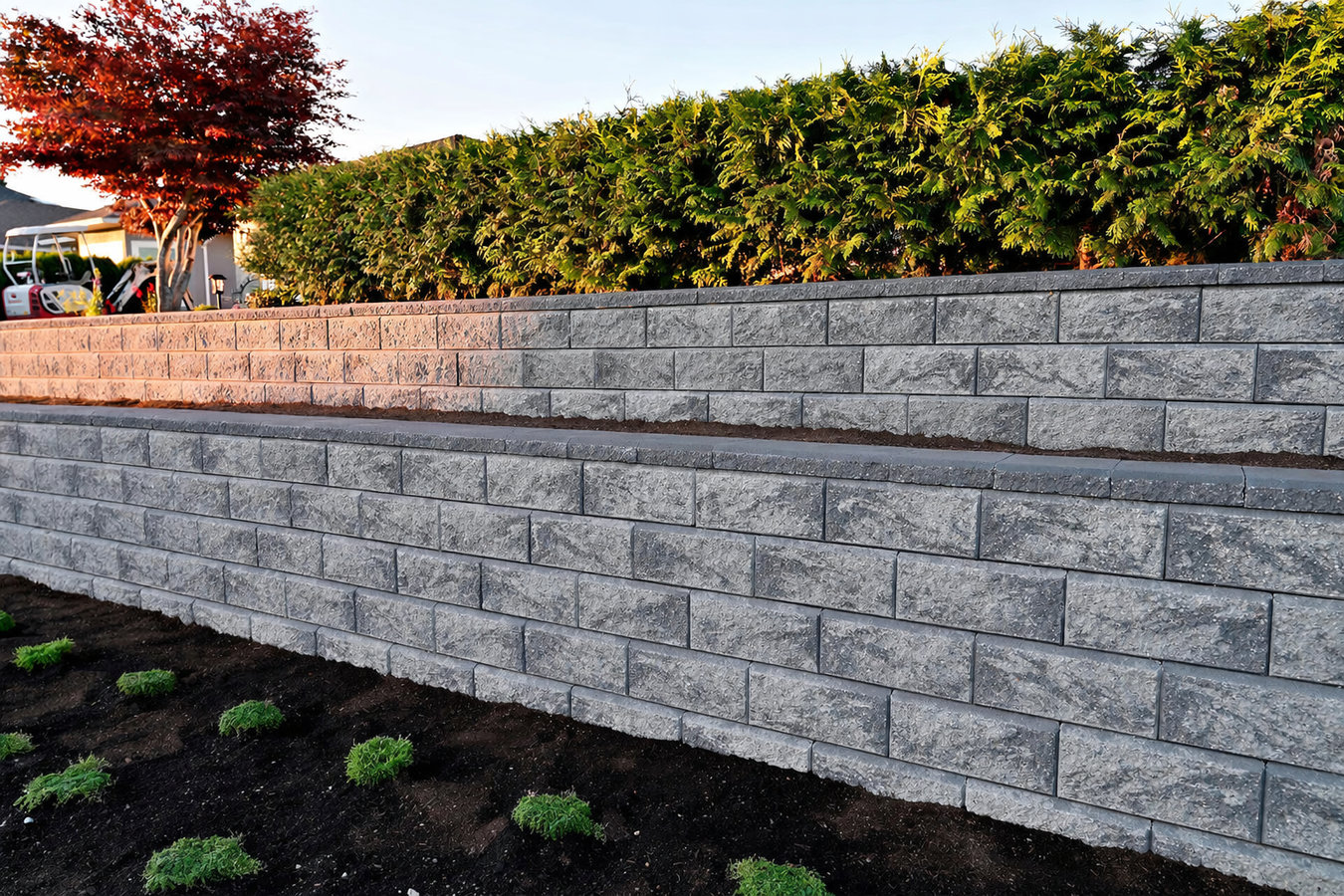
Soil sliding down a slope or pooling water pushing against your foundation? We build concrete retaining walls designed for Indiana winters, clay soils, and heavy spring runoff.
Concrete retaining walls in Peru, IN hold back soil on sloped or uneven ground and stop it from sliding, eroding, or washing away - most residential walls take two to five days from excavation to finished pour, plus roughly a week of curing before backfill loads the wall. Peru Concrete builds these walls with deep footings below the Indiana frost line and a drainage system behind the wall, because both of those details are what separates a wall that lasts decades from one that leans after a few winters. If you are dealing with steps or grade changes near the wall area, our concrete floor installation and concrete steps construction services can tie in at the same time.
Peru sits along the Wabash River in Miami County, where clay-heavy soils hold water and freeze-thaw cycles put constant pressure on anything buried in the ground. A wall that was not designed for these conditions will show it. We know the local soil, the frost depth, and what Peru's springs do to poorly drained walls - and we build accordingly.
If soil moves downhill after rain, bare patches appear where grass used to grow, or sediment collects at the bottom of a slope, the ground is eroding. Peru's spring rains and snowmelt accelerate this quickly. A retaining wall stops the movement before it reaches your driveway, foundation, or neighboring property.
A wall that tilts toward you or shows horizontal cracks has been pushed out of alignment by soil pressure - most often after a wet Indiana winter when freeze-thaw movement has worked on it for several seasons. Replacing it before it fails completely is far less disruptive than dealing with a collapse.
Runoff collecting near your home's foundation or flooding your driveway means the grade is directing water toward your structures rather than away from them. In Peru's clay-heavy soils, that water lingers instead of draining. A retaining wall combined with proper grading redirects it.
A sharp grade change can make part of your property impossible to mow, landscape, or use. A retaining wall levels that area and turns a wasted slope into flat, functional space - a garden, a patio, or simply a yard you can walk across without worrying about your footing.
Every wall we build starts with excavation to below the frost line - that footing depth is not negotiable in north-central Indiana. We compact the base, set forms or lay block courses, place steel reinforcement, and pour or stack the wall in sections. The drainage system goes in as the wall goes up: gravel backfill and perforated drain pipe or weep holes channel water away before it can build pressure. For homeowners with larger projects, our concrete floor installation service can bring a patio or usable surface right up to the new wall once it cures.
We also offer concrete steps construction to integrate a stairway into taller walls or to connect the new grade levels your wall creates. Whether your project calls for a poured wall, a segmental block system, or a combination, we walk you through the options and explain the trade-offs in plain language before any work begins.
Homeowners who want maximum structural strength and no joints - monolithic poured walls resist lateral soil pressure and water infiltration better than block systems and are ideal for taller or more heavily loaded walls.
Homeowners with moderate slopes who want a more flexible design - interlocking block systems allow curves and terracing and can be a cost-effective option for walls under four feet in height.
Properties with steep drops that exceed what a single wall can safely hold - two or more shorter terraced walls spread the soil load and create multiple level areas, each suitable for landscaping or use.
Peru is in the Wabash River valley, and the clay-heavy soils here expand when wet and contract when dry - the same cycle that makes Indiana driveways crack also puts serious lateral pressure on retaining walls. Add freeze-thaw cycles that drive water behind a wall and expand it as ice, and you have conditions that will expose every shortcut a contractor takes. A wall built without proper drainage and a footing below the frost line will lean or crack within a few winters. We account for both from the first shovel in the ground.
Homeowners in Wabash, IN and Marion, IN deal with the same clay soils and winter conditions. Our process is built around what north-central Indiana actually does to concrete: deep footings, properly sized drainage behind the wall, and a concrete mix suited to the freeze-thaw stress this region applies every season. That is how we build walls that look the same after ten Indiana winters as they did on the day we finished.
Describe the slope, approximate size, and what you want to accomplish. We respond within 1 business day to schedule a free on-site visit. No commitment needed to get a quote.
We walk the slope, assess soil conditions and drainage, measure the wall area, and note whether the height will require a permit. You receive a written estimate that covers excavation, materials, drainage, and any permit costs.
If a permit is required, we handle the application - this can add a week or two to the timeline. Once approved, we excavate to below the frost line, compact the base, and build the wall with drainage installed as we go.
After a week of curing, we backfill behind the wall in compacted layers and grade the surface so water flows away. We walk the finished wall with you before we call the job done.
We respond within 1 business day. There is no obligation to submit a request - just describe your slope and drainage situation and we will get back to you with questions or to schedule a free on-site estimate.
(765) 919-8766Every wall we build has a footing set below the local frost depth - the point where the ground freezes in a hard Indiana winter. A footing that sits above that depth will heave when the ground freezes and tilt or crack the wall above it. This is not a bonus feature; it is the baseline for building anything that holds in this climate.
We install gravel backfill and perforated drain pipe or weep holes behind every wall we build. Peru's clay soils and wet springs mean water does not drain away on its own. Without that drainage layer, the wall is fighting water pressure all spring - and eventually the water wins. A properly drained wall faces a fraction of that load.
We work across Miami County and the surrounding north-central Indiana region. We know the soil conditions, the frost depth requirements, and the local permit process - which means fewer surprises for you and a project that moves forward without delays caused by unfamiliar local requirements. Ask about our recent projects in the area.
Peru Concrete follows best practices set by the American Society of Concrete Contractors, the national organization that sets workmanship and quality standards for cast-in-place concrete work. That means the wall we build for you is held to an industry standard, not just our own judgment.
Every one of these details adds up to a wall that does not give you problems in year two or year five. We build retaining walls in Peru to hold for decades - because that is what you are paying for when you invest in permanent concrete work.
Once your wall is in place, bring the new level area to life with a poured concrete floor or patio slab.
Learn MoreConnect the grade levels created by your retaining wall with safe, durable concrete steps built to match.
Learn MoreSpring rains arrive fast in north-central Indiana - the sooner your wall is in the ground, the sooner your slope stops working against you. Call us or submit a request today.