
Loading...
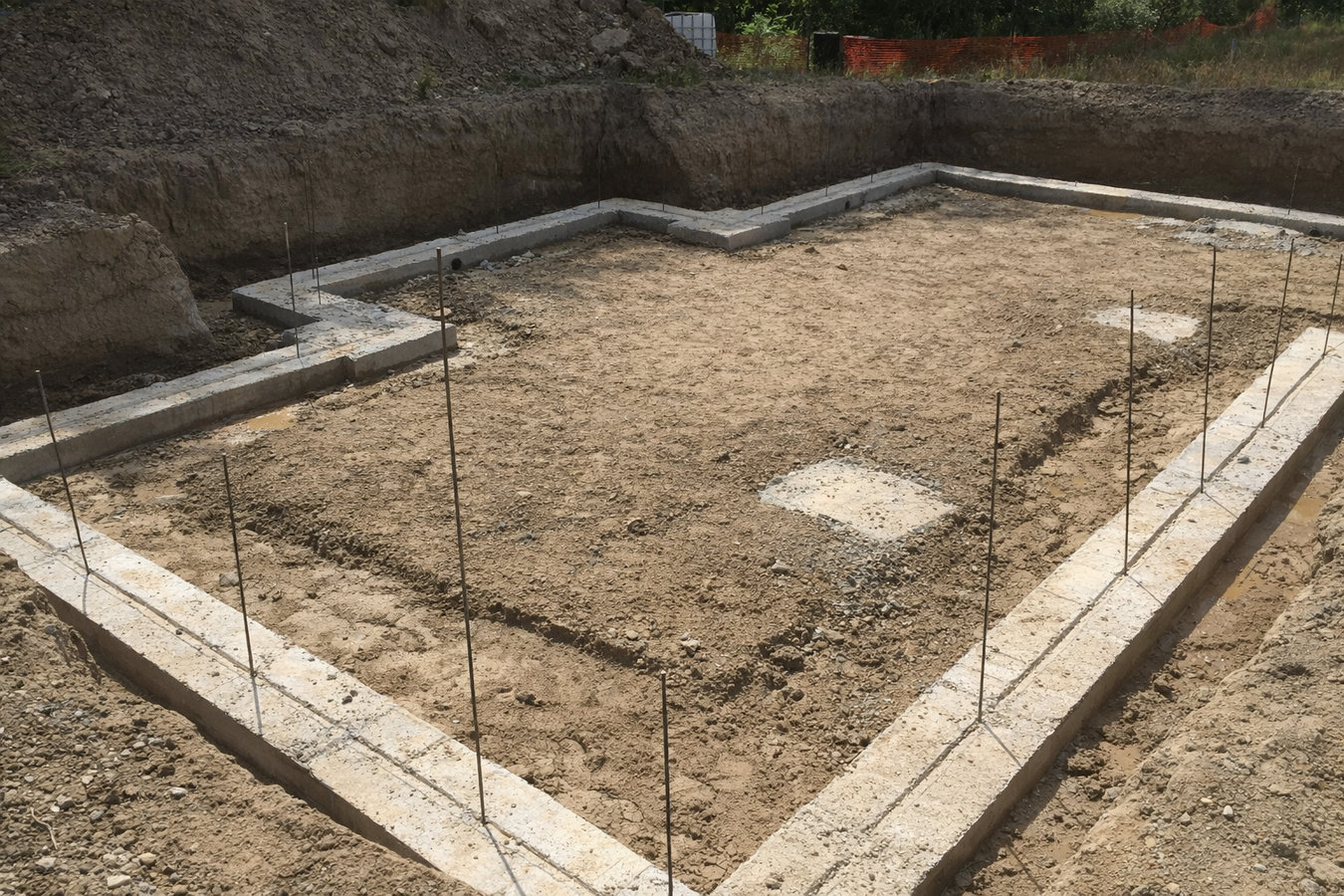
Deck posts heaving? Planning an addition or garage? Properly poured footings below Indiana's frost line keep your structure stable for decades.
Concrete footings in Peru are the below-ground base poured to support a structure above - an addition, garage, deck, or porch - by spreading the load across stable soil below the frost line, with most residential footing projects completing the pour in a single day after excavation and inspection are done. Without the right depth and reinforcement, Peru's winter freeze-thaw cycles will push the footing upward and crack whatever is built on top of it.
Most homeowners do not think about footings until something goes wrong - deck posts lean, doors stick, or cracks appear in a new addition. By then, the fix is more involved than it would have been at the start. Miami County's clay-heavy soils add another layer of complexity: clay expands when wet and contracts when dry, which means footings here need to be sized and reinforced for that movement, not just designed to a generic template.
If your project involves a full foundation wall sitting on top of the footings, our foundation installation service covers the complete below-grade structure.
Any new structure attached to or sitting on the ground starts with footings. If you are adding a room, building a detached garage, or putting up a covered porch, the footing is the first and most critical step. Skipping or undersizing it affects everything built above, and problems that start at the bottom do not fix themselves.
If deck posts are pushing up out of the ground or tilting out of plumb, frost heave from shallow footings is almost always the cause. In Peru's winters, posts set without footings that reach below the frost line will move every year. Replacing them with properly depth footings stops that cycle for good.
Diagonal cracks running from window or door corners in a newer addition, or walls that are visibly out of plumb, often trace back to a footing that is settling unevenly. Clay soils that shift with moisture changes are a common culprit in Miami County. Getting the footing situation assessed early is far less costly than waiting until structural damage is severe.
If a previous owner built a garage, shed, or addition without permits, there is a real chance the footings were not built to code - or were skipped entirely. When you go to sell the home or pull a permit for other work, this becomes a problem. Properly permitted and inspected footings give you a clean record and remove that uncertainty.
We handle the full footing process - permit application, utility marking coordination, excavation to the required depth, steel reinforcement placement, pour, and cold- or hot-weather protection depending on the season. We schedule the required building inspection before any concrete is placed, which confirms the excavation depth and preparation are correct before everything gets buried. Our crew works in Peru and across north-central Indiana, so we understand what Miami County's soils and frost depth actually require in practice.
For projects that go beyond the footings themselves, we also provide foundation raising when an existing foundation has settled and needs correction, and foundation installation for full below-grade wall systems on new construction and major additions.
Suits homeowners replacing heaving post footings or installing a new deck or covered porch that will hold up through Indiana winters.
Suits property owners building an attached or detached addition who need the full permit, inspection, and pour handled correctly the first time.
Suits projects where individual columns or posts carry a load and need a properly sized, steel-reinforced concrete base below the frost line.
Suits structures with existing frost heave damage or undersized footings that are causing movement in the structure above.
Peru sits in north-central Indiana, where the ground can freeze to a significant depth - historically in the range of two to three feet across Miami County. A footing that does not reach below that freeze depth will be pushed upward every winter, and the cumulative movement over several years can cause serious structural damage. The clay-dominant soils left by glacial deposits across this region add a second challenge: clay moves with moisture, expanding when wet and contracting when dry, so footings here need to be sized and reinforced to handle that stress rather than designed to a generic plan.
We serve the whole area, including Wabash and Marion, where older housing stock and additions built before current footing standards are common. If you are adding on to an existing structure, we assess how the new footing connects to or sits alongside what is already there - mismatched depths can cause differential settling at the joint, which is a problem we plan around from the start.
We visit your property to understand what you are building, where it sits on the lot, and what the soil and access conditions look like. You get a written estimate that specifies depth, reinforcement, and concrete mix. We reply within 1 business day.
We submit the permit application to the local building department and coordinate underground utility marking through Indiana's call-before-you-dig service - required by law before any excavation. Permit review typically takes a few days to a couple of weeks depending on the office's workload.
The crew digs to the required depth below the frost line and places steel reinforcement. The building inspector then visits to confirm the excavation is correct before any concrete is poured. This inspection is a protection for you - it is a check that what gets buried is built right.
Concrete is poured and protected from temperature extremes - insulating blankets in cold weather, misting or shading in heat. Fresh footings need several days to cure before construction above can begin. We let you know exactly when the next phase can start and what to expect from the final inspection.
We handle the permit, the inspection, and the pour - so your project starts on solid ground. No obligation to get an estimate.
(765) 919-8766We dig to the depth that local building code requires for north-central Indiana's frost conditions - typically two to three feet in Miami County. We do not guess or use a shallow default to save time. Getting this depth right is the one decision that determines whether a footing holds steady or heaves after the first hard winter.
The clay-dominant glacial soils across this area move with moisture, and we size and reinforce footings to handle that - not to a one-size-fits-all template. The American Concrete Institute publishes guidance on concrete mix and reinforcement for challenging soil conditions that shapes how we approach local projects.
We pull the required permit and schedule the footing inspection before any concrete is placed - this is standard practice, not an add-on. A contractor who skips the permit is also skipping the only independent check that confirms the footing depth and preparation are correct before the concrete covers everything up. We do not skip it.
Peru's shoulder seasons - late fall and early spring - still see below-freezing nights, and fresh concrete that freezes while curing loses strength permanently. We protect pours with insulating blankets and use appropriate mix adjustments when temperatures are a concern. If conditions are wrong for a quality pour, we tell you rather than pushing forward and leaving you with a compromised footing.
Every footing we pour comes with a permit record, a passed inspection, and a concrete mix and depth suited to what Peru's winters and soils actually demand. That documentation and care protect your project long after the concrete is cured.
Lifting and correcting a settled or uneven foundation so the structure above returns to level.
Learn MoreComplete below-grade foundation wall systems for new construction and major additions built on properly designed footings.
Learn MoreWe handle the permit, schedule the inspection, and protect the pour - reach out now and we will get you a written estimate within 1 business day.